Matterlyt answers the security and AI-governance questionnaires that stand between companies in the AI stack and their enterprise deals.
Enterprise due diligence for the AI stack
Get the security questionnaire
off your desk.
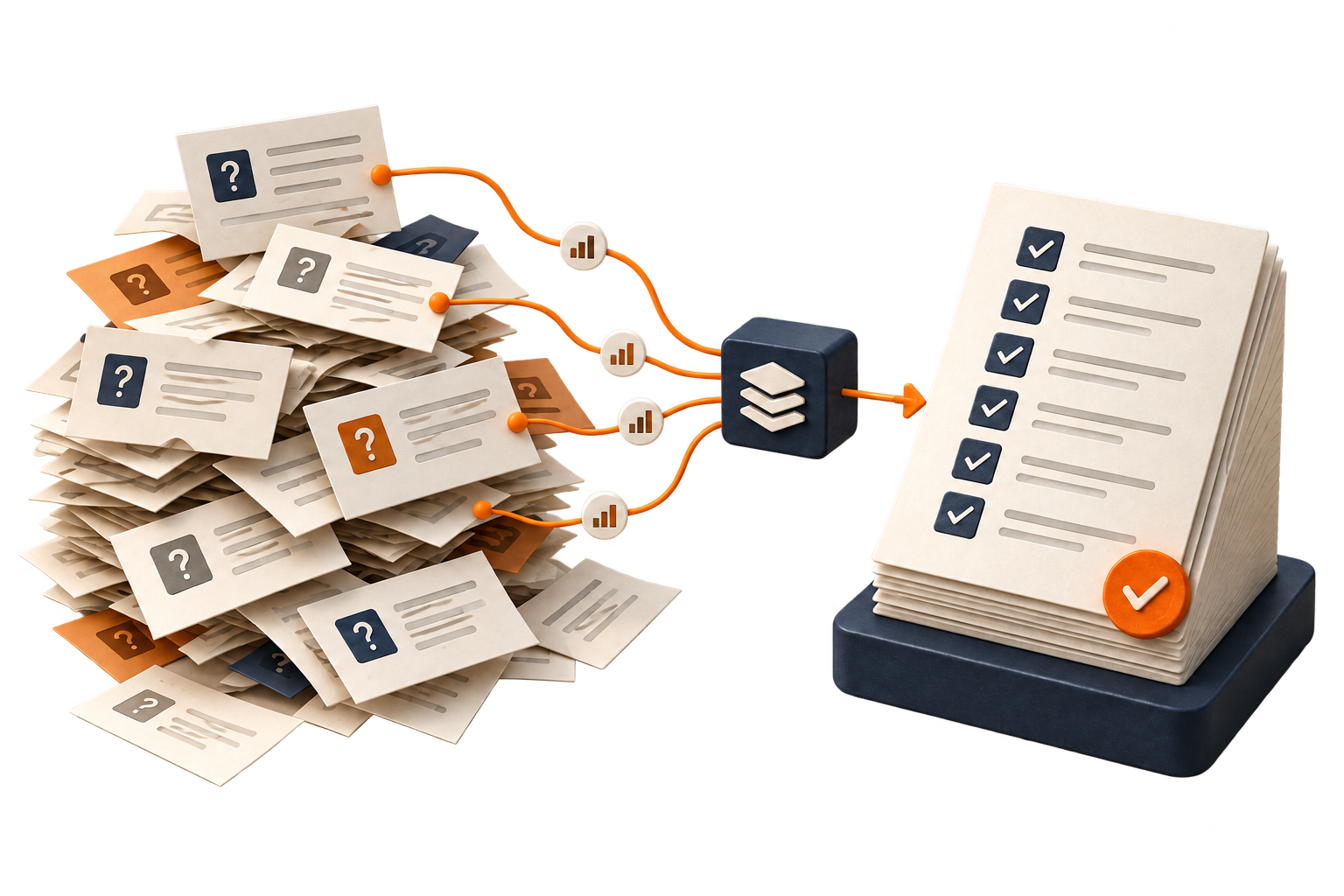
Your buyer sends a spreadsheet. Matterlyt drafts the security and AI-governance answers from your documents and past reviews. You check the sources, fill the gaps, and send it back.
Design partner pricing available. Onboarding included.
Sound familiar?
The demo went well. Then the spreadsheet arrived.
You build models, AI products, or the infrastructure behind them. When the buyer sends a security review, it lands on your desk too.
It's 11pm. You're on row 87.
The buyer wants to know about encryption, access controls, and incident response. You know the answers. Typing them into another spreadsheet is how you end up working through the evening.
Then you open the AI tab.
Which models touch customer data? Are prompts retained? Who owns the training data? The review gets into details scattered across your architecture docs, provider agreements, and policies.
You answered this last quarter.
The wording was good, too. But was it in the old questionnaire, a Slack thread, or an email to the buyer? You search for a while, then write it again.
The buyer is waiting for the file.
Your champion follows up. Procurement needs the completed review before the deal can move. You still have a product to build, and the spreadsheet is still open.
From a blank questionnaire
to a draft you can check.
Matterlyt does the first pass. You decide what goes back to the buyer.
Upload the buyer’s file
Add the spreadsheet, Word document, or PDF. Bring your past questionnaires and policies too: they give Matterlyt your own answers to work from.
Get a draft with sources
Matterlyt matches each question to your knowledge base and drafts an answer with its source. When an answer is missing, it asks the right person on your team and saves their response.
Review it and send it back
Check the draft and the flagged answers, then download the completed file in its original format. Send it to the buyer from your own email.
THE NEXT QUESTIONNAIRE
Keep the answers you worked so hard to write.
Your first review takes care and attention. Matterlyt saves the answers you confirm, so the next buyer can ask the same question in different words without sending you back to a blank cell.
First questionnaire
Make the answers yours
Import what you already have. The built-in library adds templates for about 200 security and AI-governance questions. Check them against how your company works; they stay unverified until you confirm them.
Next questionnaire
Use what you’ve already checked
Familiar questions draw on your confirmed answers. Matterlyt flags missing details, older information, and contradictions so you can see where to spend your review time.
As your library grows
Give your experts fewer repeat questions
The more ground your library covers, the fewer questions need a fresh answer from engineering or legal. When your architecture or policies change, update the answers that depend on them.
WHEN SOMEONE LEAVES THE TEAM
Their answers don’t leave with them.
The explanation of your backup setup. The detail about a model provider. The wording you agreed with legal. Keep it in your due-diligence knowledge base, where the next person can find it.
Your answers
saved for next time
FEATURES
Less searching.
More answers you can check.
Get a starting point, bring in the right people, and check the details before an answer reaches a customer.
Start with the questions buyers ask
The AI Vendor Trust Backbone includes about 200 questions, editable answer templates, and evidence checklists. It covers security reviews and the extra questions buyers ask about AI. You confirm what applies to your company.
Ask the person who knows
A question about backups goes to the person who runs them. A question about data rights goes to the person who handles the agreements. Matterlyt saves the answer for future reviews.
Catch answers that no longer match
Changed a provider or updated a policy? Matterlyt flags stale information, conflicting answers, and gaps in your due-diligence knowledge base. Your team reviews and corrects them.
See where the answer came from
Open the source behind an answer before you send it. Confidence flags show where Matterlyt is uncertain, so you know which responses need a closer read.
FAQ